
Key Facts About Tutankhamun
Boy King: Tutankhamun ascended to the throne at just nine years old and died unexpectedly around the age of 18 or 19.
Restoration of Tradition: He was born Tutankhaten, but during his reign, he reversed the radical religious changes of his probable father, Akhenaten, who had promoted the
worship of a single sun god, Aten. Tutankhamun restored the traditional polytheistic religion, changing his name to "Tutankhamun," meaning "living image of Amun".
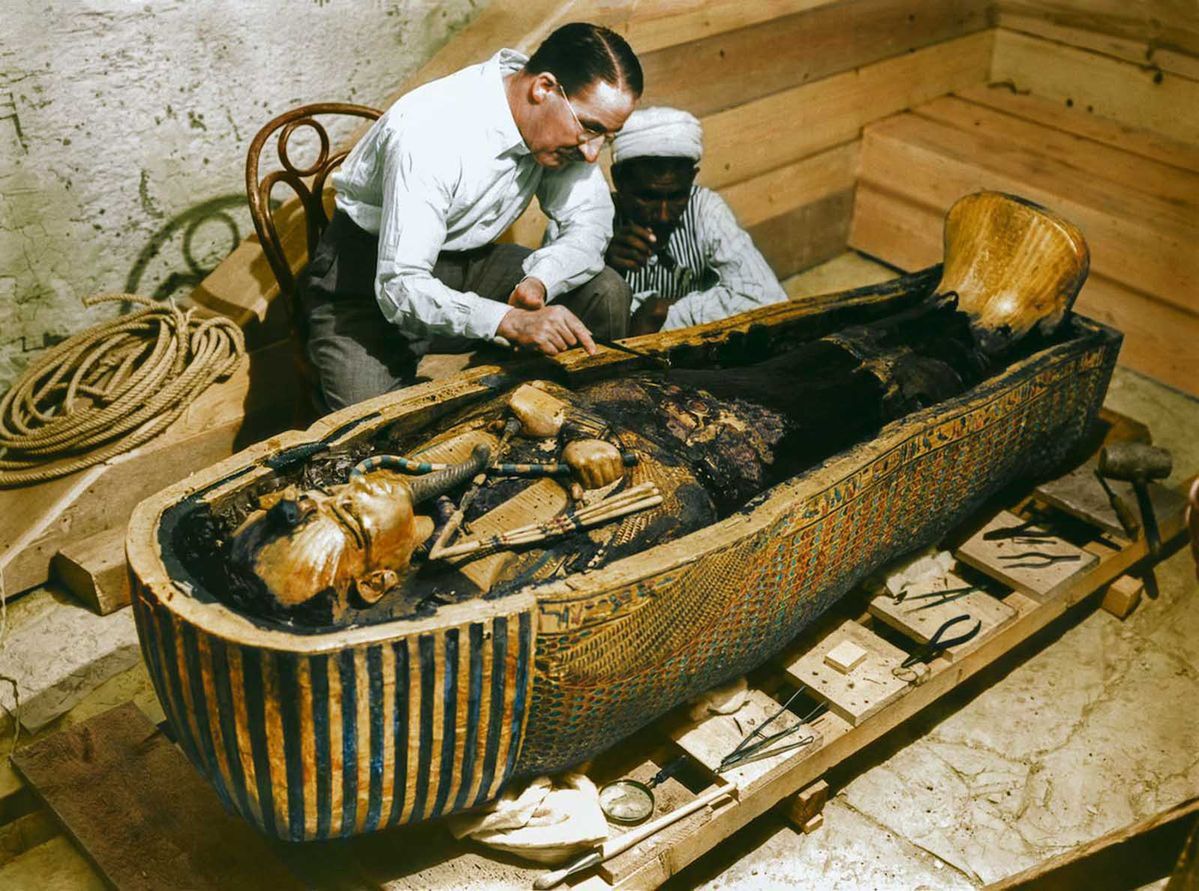
Undisturbed Tomb: While most royal tombs in the Valley of the Kings were looted in antiquity, Tutankhamun's small tomb (KV62) was buried under the debris of later constructions and remained largely hidden. Its discovery by British archaeologist Howard Carter in 1922 was a worldwide sensation.
Golden Treasures: The tomb contained over 5,000 artifacts, offering an unparalleled look into the material culture and funerary practices of ancient Egypt's New Kingdom. The most famous item is the solid gold funerary mask, now housed in the Grand Egyptian Museum in Giza.
Mysterious Death: The exact cause of his death is still debated. Modern scientific analyses of his mummy suggest he was a physically frail young man with a clubbed foot, and a combination of malaria and a leg fracture may have contributed to his demise.
Erased from History: After his death, his name was largely omitted from official king lists and his monuments were usurped by his successors, particularly Horemheb. This historical erasure, ironically, helped preserve his tomb from the deliberate destruction that other pharaohs' monuments suffered.
Today, Tutankhamun remains an enduring symbol of ancient Egypt, with many of his artifacts on display at the Grand Egyptian Museum in Giza.